
When Access Changes: Keep the Inspection Limitation Record Accurate
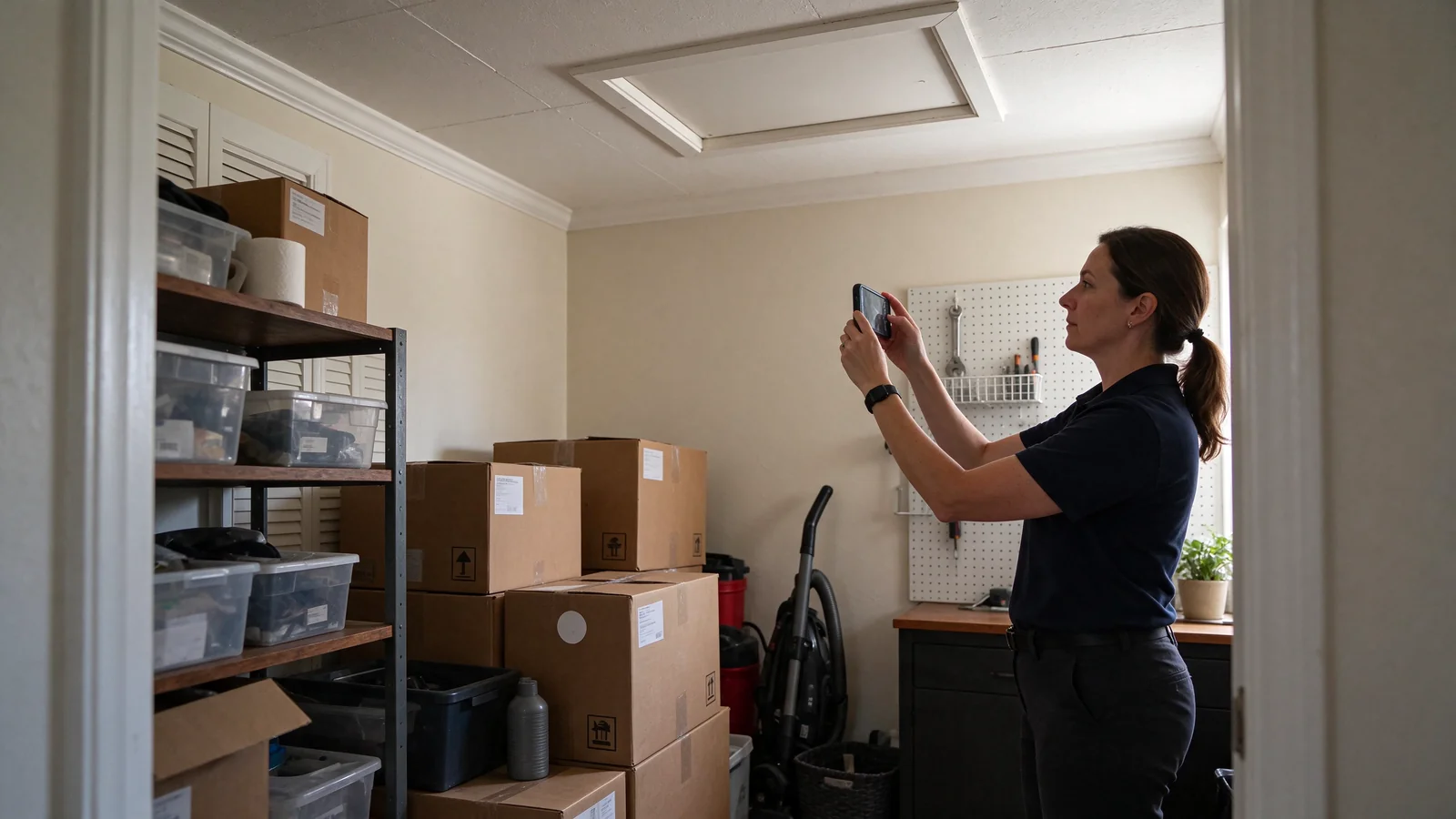
Record the actual access condition before treating a component as inspected. AI-generated illustration.
A blocked attic hatch can produce a straightforward “not inspected” entry. The record becomes harder to manage when the owner clears the closet before you leave, or the client asks you to return later. Access has changed, but that alone does not mean the attic has been inspected. Your report needs to explain what happened to that specific component without erasing the earlier limitation or overstating the later work.
The useful habit is to connect the initial restriction, changed conditions, and actual observations. Follow the evidence rather than treating “accessible,” “inspected,” and “no problems found” as interchangeable statuses.
Identify what the limitation actually means
Start by distinguishing an agreed exclusion from work you intended to perform but could not complete. A component outside the engagement is different from an included attic that was inaccessible. Partial inspection is different again: viewing an area from an opening does not necessarily provide the same observations as entering safely.
The current ASHI Standard of Practice, section 2.2.B.4, calls for reporting designated systems and components that were present but not inspected, with the reasons. Apply the standards and legal requirements governing your own assignment; that ASHI clause is not a universal national law. InterNACHI’s residential standard also recognizes inaccessible areas and does not require moving personal belongings or taking unsafe actions. Its wording should not be substituted for your applicable reporting requirements.
Record the initial condition precisely
Consider an illustrative inspection where stacked storage boxes prevent safe placement of a ladder beneath the upstairs hallway closet’s attic hatch. Identify that location, the obstruction you observed, and the work you could not perform. Photograph the access condition without rearranging the belongings. Avoid a vague sentence such as “attic limited,” which leaves the reader guessing whether you entered, looked from the opening, or never opened the hatch.
Record anything actually observed separately. If you could not open the hatch, do not describe attic insulation or framing as inspected. If some roof structure was visible through a different opening, identify that viewpoint and its limits. Our effective inspection template episode provides related context on recording methods and access conditions; the individual entry still needs to match this property.
When access changes during the inspection
Suppose the owner moves the boxes while you inspect another room. Reassess the opening yourself. The owner’s statement establishes what they say changed, not whether access is safe or an inspection is complete. A clear floor might still leave an unsuitable ladder position, a stuck hatch, or another condition that prevents proceeding.
If you can perform the remaining work safely within the engagement, add your actual observations. Keep the earlier access photograph and time sequence in the inspection file. In the final report, make the current inspection status clear: explain that access was initially blocked, what changed, and the method and extent of the work subsequently completed. Do not leave contradictory entries saying both “not inspected” and “inspected” without explanation.
A return visit adds evidence, not a whole-house reset
If access becomes available after delivery, preserve the original issued report and supporting records. A later update should identify the original inspection, the return date, the component addressed, and the observations made then. Follow your established document-retention and correction process rather than silently replacing the original limitation as though it never existed.
For the attic example, a dated addendum could explain that the closet floor was clear on the return visit and describe the access method used. It should then report the observed conditions and any remaining restrictions. If stored items inside the attic still concealed portions of the space, clearing the closet did not resolve that separate limitation. Findings observed later belong to that later observation date, not retrospectively to the initial inspection.
Our risk-mitigation podcast discussion already addresses conspicuous limitations and component-specific return reports. The additional discipline here is continuity: a reader should understand how the component’s record changed, without assuming unrelated systems were reinspected.
Check the record before sending the update
Compare the component entry, summary, photographs, and delivery message. They should agree about what remains uninspected. “Owner cleared access” is not a finding of satisfactory condition, and an offered return visit is not completed work. Communicate any outstanding evaluation or access step without promising that a future visit will resolve every uncertainty.
Before your next inspection, choose one commonly restricted component and review how its record would read after access changes. Can another inspector identify the initial obstacle, later inspection method, observation date, and unresolved limitations? If not, revise the entry structure. This is practical reporting guidance, not a liability guarantee or legal advice; use applicable requirements and seek qualified advice for your retention and revision policies.
Related Articles
Continue exploring Home Inspection Practice.

The Unsung Traits of an Exceptional Home Inspector: Modesty, Communication, and Empathy
What Makes a Great Home Inspector When people think of a great home inspector, traits like technical expertise, attention to detail, and experience often come to mind. While these qualities are...
Read Article
What a Home Inspector Does Not Do
Importance of Knowing What Inspectors Do and Don't Do Home inspectors perform many essential tasks and their thorough investigations help people find out the true condition of a home. A good home...
Read Article
Checklist for Home Inspections
Why a Checklist Is Needed Performing a complete and thorough home inspection should be the goal of every home inspector. Not only is your reputation on the line, but having a trustworthy report is...
Read Article